
A high pressure lab reactor system gives research teams a controlled way to test reactions that need pressure, heat, stirring, and corrosion-resistant materials. For R&D labs working on chemical synthesis, hydrogenation, catalyst testing, new materials, polymers, biomass conversion, or pharmaceutical intermediates, the right reactor can shorten development time and make small-batch experiments easier to repeat.
Why R&D Labs Need a High Pressure Reactor
Many laboratory reactions behave differently when pressure changes. A solvent may stay liquid at a higher temperature, a gas-liquid reaction may become faster, and a catalyst may show better selectivity only under a defined pressure range. This is why a high pressure lab reactor is not just a metal vessel. It is a complete test platform for pressure, temperature, stirring, sealing, material compatibility, and safe operation.
The demand for better research equipment is also connected to the growth of R&D activity in universities, pharmaceutical companies, chemical manufacturers, and clean-energy laboratories. A reliable reactor helps teams move from a reaction idea to repeatable process data, which is the bridge between discovery and scale-up.
For labs comparing reactor types, ZZKD offers equipment for small experimental work as well as larger stainless steel systems. If you are still learning the category, the ZZKD guide to a high pressure laboratory reactor is a useful starting point.
What Is Included in a Typical ZZKD Lab Reactor System?
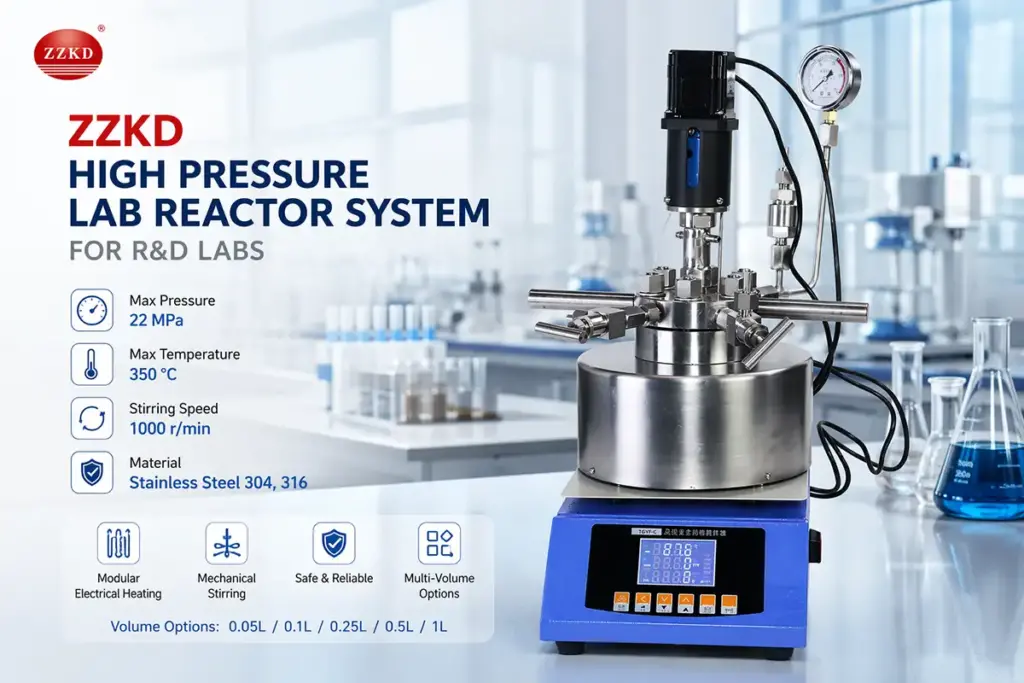
A typical ZZKD high pressure lab reactor system includes the reactor vessel, sealing structure, stirring motor, heating module, pressure gauge or sensor, temperature control, valves, and a support frame. Depending on the model and test purpose, it can also include cooling, sampling, gas inlet and outlet lines, rupture protection, and optional data recording.
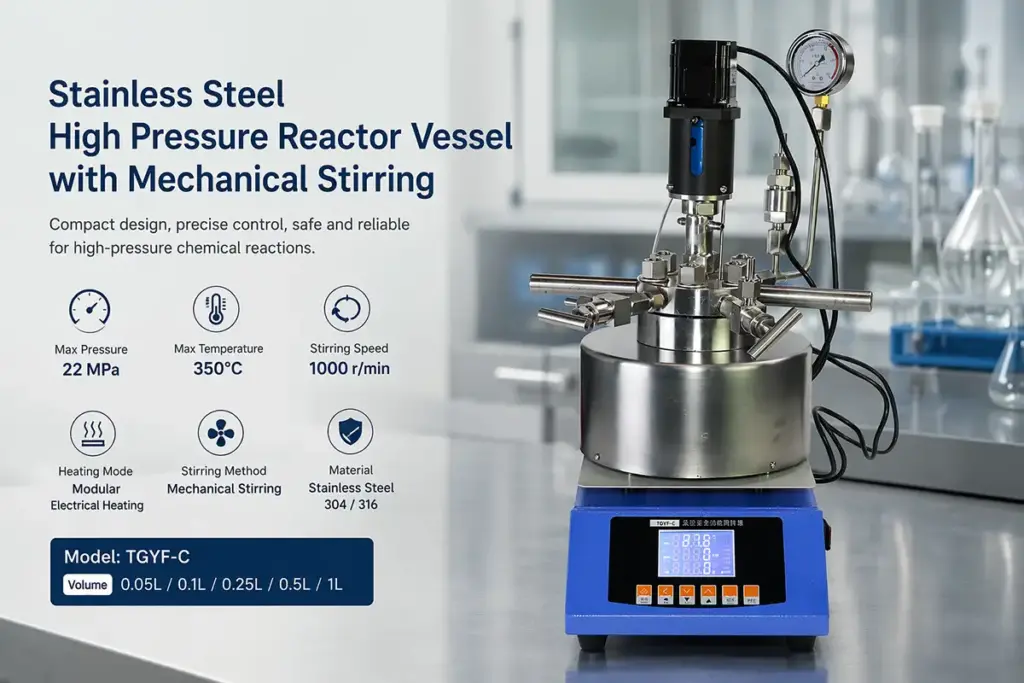
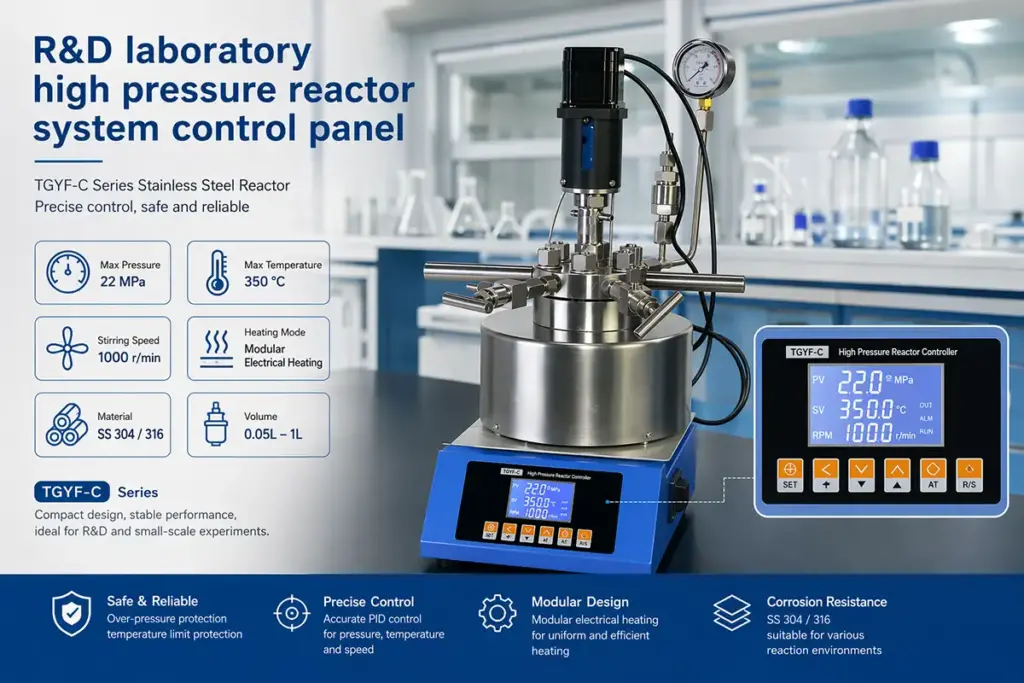
For the TGYF-C series, the available working volumes include 0.05 L, 0.1 L, 0.25 L, 0.5 L, and 1 L. The rated pressure is 22 MPa, the rated temperature is up to 350°C, and the stirring speed is 1000 r/min. The system uses modular electric heating and mechanical stirring. Reactor materials include stainless steel 304 and stainless steel 316, so users can choose based on corrosion resistance and budget.
These specifications make the system practical for early-stage R&D, where researchers need a small charge volume, stable mixing, and a pressure rating high enough for many gas-liquid and high-temperature liquid-phase reactions.
Common Applications in Research Labs
A high pressure lab reactor system is commonly used for hydrogenation, oxidation, alkylation, polymerization, hydrothermal synthesis, catalyst screening, supercritical fluid tests, and high-temperature solvent reactions. In hydrogenation work, pressure control and stirring quality are especially important because gas transfer affects reaction speed and product consistency. ZZKD also has related reading on high pressure hydrogenation reactors for teams focused on hydrogen-based processes.
For chemical synthesis, a small pressure reactor helps researchers test reaction conditions before they invest in pilot equipment. A team can adjust temperature, pressure, catalyst loading, residence time, solvent, and stirring speed, then compare yield and purity. For more synthesis-focused context, see ZZKD’s article on a high pressure reactor system for chemical synthesis.
Safety and Compliance Points Buyers Should Check
Pressure equipment should be selected carefully because pressure, heat, gases, and chemicals can create serious hazards when they are not controlled. According to ASME BPVC Section VIII Division 1, pressure vessels operating over 15 psig are covered by rules for design, fabrication, inspection, testing, and certification. Even when a small lab reactor is not being purchased as an ASME-stamped production vessel, this standard is a useful reference point for understanding why design margin, material choice, welding quality, pressure testing, and overpressure protection matter.
Laboratory users should also connect reactor operation with their safety management system. OSHA 29 CFR 1910.1450 requires a Chemical Hygiene Plan for laboratories using hazardous chemicals. In simple terms, the lab should have written procedures, suitable personal protective equipment, training, and emergency measures before running high-pressure reactions.
Before buying, ask about the maximum allowable working pressure, temperature rating, gasket or seal material, pressure relief method, vessel material certificate, leak testing, stirring shaft sealing, and after-sales support. The best reactor is not only the one with the highest pressure rating. It is the one that matches the chemistry, operator skill level, lab utilities, and planned test volume.
How to Choose the Right Volume and Material
For discovery work, 50 mL to 250 mL can reduce chemical cost and waste. For repeatability studies or sample preparation, 500 mL to 1 L is often more comfortable because it gives enough material for analysis, purification, and downstream tests. If the reaction foams, generates gas, or uses solids, leave enough headspace and do not fill the vessel to the top.
Stainless steel 304 is suitable for many general laboratory reactions. Stainless steel 316 is usually preferred when the process involves stronger corrosion risk, chlorides, or more demanding solvents. If the reaction medium is highly corrosive, discuss liners, special alloys, or alternative materials before ordering.
Price Guidance for a ZZKD High Pressure Lab Reactor
Based on the available ZZKD high pressure reactor price list, small laboratory high pressure reactor models are commonly quoted from about USD 1,100 to USD 1,900, while larger systems such as 50 L configurations can rise to around USD 10,500 or more. When a product has multiple prices, a practical middle-but-still-affordable reference is about USD 1,500 for a 50 mL to 1000 mL lab stainless steel high pressure reactor configuration. The final price depends on volume, material, pressure rating, temperature control, stirring type, control cabinet, safety accessories, and customization.
For procurement teams, the better question is not only “What is the cheapest reactor?” A more useful question is “Which reactor gives our lab enough pressure, mixing, safety margin, and service support for the next two years of experiments?” A low price is attractive, but a well-matched reactor saves time when experiments become more complex.
Why Choose ZZKD?
ZZKD focuses on laboratory and pilot-scale equipment for chemical research, extraction, evaporation, drying, and pressure reaction. For R&D labs, the advantage is practical configuration: compact volume choices, stainless steel construction, mechanical stirring, modular heating, and options for different reaction needs. The TGYF-C high pressure lab reactor system is especially suitable for teams that need a small, easy-to-place reactor for repeated screening and method development.
When you contact ZZKD, share the reaction medium, target temperature, target pressure, gas type, working volume, corrosion concerns, and whether sampling or data logging is needed. With those details, the recommended system will be closer to the real experiment instead of a generic catalog choice.
FAQ
What pressure can the TGYF-C high pressure lab reactor reach?
The TGYF-C series is rated at 22 MPa, which is suitable for many small-scale high-pressure R&D reactions. Users should always operate within the rated pressure and follow the lab’s safety procedures.
Can one reactor handle every chemical reaction?
No. Volume, pressure, temperature, material, seal type, and corrosion resistance must match the chemistry. A stainless steel 316 vessel may be better than 304 for more corrosive processes, but some media may require special solutions.
Is a 1 L reactor better than a 50 mL reactor?
Not always. A 50 mL reactor is efficient for early screening and expensive raw materials. A 1 L reactor is better when the lab needs more product for analysis or follow-up testing.
What information is needed for a quotation?
Prepare the target volume, operating pressure, operating temperature, reaction materials, gas type, solvent, stirring requirement, and any special safety or control needs. This helps ZZKD recommend the correct reactor system and price.